Why does the Graza ad work?
It teaches before it sells. “Mayo is 65% oil” is a small lesson. People like learning something in the feed, and the lesson sets up the pitch.
The twist is one word. The second line repeats the first and adds “olive”. The repetition makes the difference jump out.
It borrows the brand’s best asset. Graza is an olive oil brand. The mayo ad leans on that, so a new product inherits trust from the one people already know.
What copy is worth stealing?
Here is every line of text on the ad and around it, transcribed as it ran. Spelling and capitals are the brand’s.
- On-ad headline
- Mayo is 65% oil.
- On-ad subline
- Ours is 65% olive oil.
- On-ad badges
- NEW! · available at amazon
- Primary text
- Mayo's about 65% oil, which is why you gotta use the good stuff!
- Link headline
- Real Olive Oil Mayo
- Button
- Shop Now
What does the Graza mayo ad show?
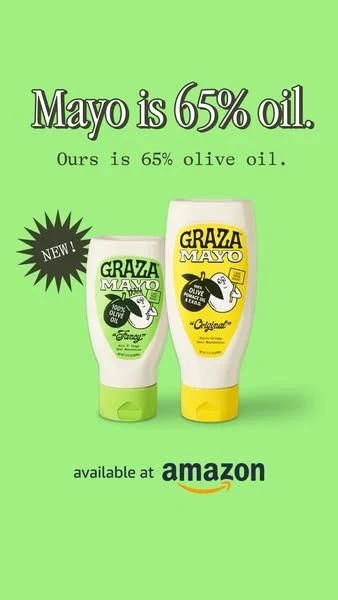
A flat, bright green background fills the frame. The headline sits at the top in a heavy display face: Mayo is 65% oil. Under it, in a typewriter style, the subline reads Ours is 65% olive oil.
Two squeeze bottles stand in the middle. One is labeled Fancy and one Original, and a black starburst says NEW! At the bottom, the ad notes it is available at Amazon.
Why does a category fact make a strong hook?
Most food ads say a product tastes good. Every brand says that, so readers skip it. A fact about the category is different. It is new information, and new information earns a second look.
The fact also changes the question in the shopper’s head. Before the ad, the question was “which mayo tastes best?” After it, the question is “which oil is in my mayo?” Graza has the best answer to the second question.
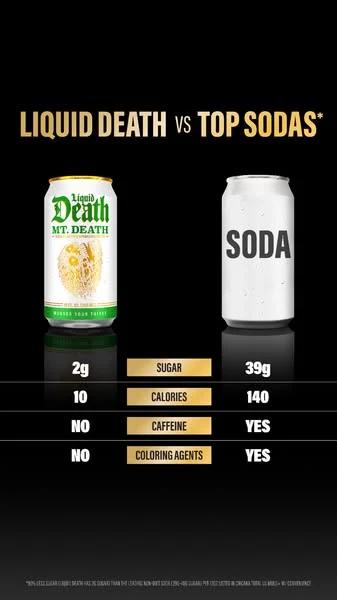
That is the core of the comparison hook: reframe the choice so your product wins it. Liquid Death’s soda chart does the same thing with numbers.
How does this compare with Graza’s other ads?
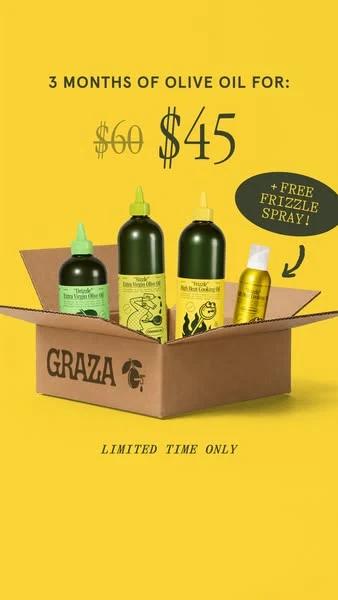
Graza runs a very different ad for its oils: a yellow price card that says 3 months of olive oil for $45. We filed it as the Graza olive oil bundle ad.
The two ads do two jobs. The bundle ad talks to people who already want olive oil and need a reason to buy now. The mayo ad talks to people who never thought about the oil in their mayo. One closes, the other opens.
How would you use this hook?
- Write down five facts about your category that most buyers don’t know.
- Keep the one that makes the standard product look worse without being unfair.
- Write a second line that repeats the fact with your one-word difference.
- Put both lines above the product shot, and cut everything else.
- Check that the fact is accurate and that you can source it.
Where does the click go?
The on-ad badge says available at Amazon, and the button says Shop Now. Like many grocery brands, Graza points this ad toward a retailer.
If your ad teaches a fact, make sure the next page repeats it. A shopper who clicked because of “65% olive oil” should see that line first, not a generic product grid.
Frequently asked questions
What is Graza?
Graza is a food brand best known for olive oil in squeeze bottles. This ad promotes its newer olive oil mayo in two versions, Fancy and Original.
Is it true that mayo is about 65% oil?
Oil is the main ingredient in most mayonnaise, and the ad states 65%. We report the claim as printed; check a product’s own label for exact numbers.
When did this Graza ad start running?
Meta’s Ad Library listed a start date of August 25, 2026 for Library ID 1633524911630496. It was active when we captured it on November 19, 2026.