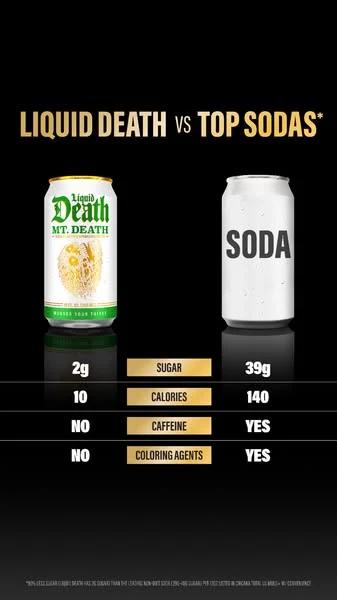
Comparison ad examples
By The Archive Desk · Updated · 4 entries
A comparison ad puts your product next to something the buyer already knows, then lets them judge the gap. The rival can be a category (“top sodas”), a fact about the category, or the buyer’s own past, as in a before and after. The best ones let the reader reach the conclusion alone.
Comparison is the oldest move in advertising, and still one of the most useful. It works because people judge things by contrast. A number means little alone and a lot next to another number.
The four ads below run the same hook in four different costumes: a nutrition table, a single line of type, two photos and a call-out letter.
How do you write a comparison ad?
- Compare against a category or a past state, not a named rival.
- Choose the difference with the biggest, most visible gap.
- Keep everything else equal: same light, same units, same scale.
- Let the image show the gap before the copy explains it.
- Footnote any claim, and make sure it holds up.
The entries
Jones Road BeautyBeauty
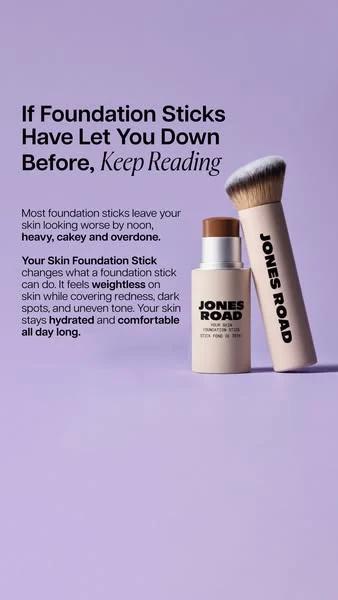
If foundation sticks have let you down…
Long-copy static · Call-out · Comparison
How do these ads compare at a glance?
| Brand | Industry | Format | The line that does the work |
|---|---|---|---|
| Liquid Death | Beverage | Comparison chart | Liquid Death vs Top Sodas |
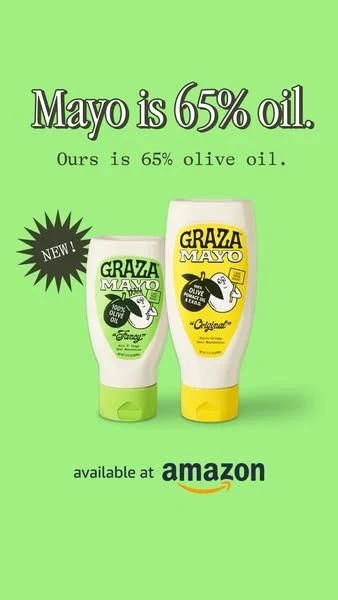
| Graza | Food | Product + headline | Mayo is 65% oil. |
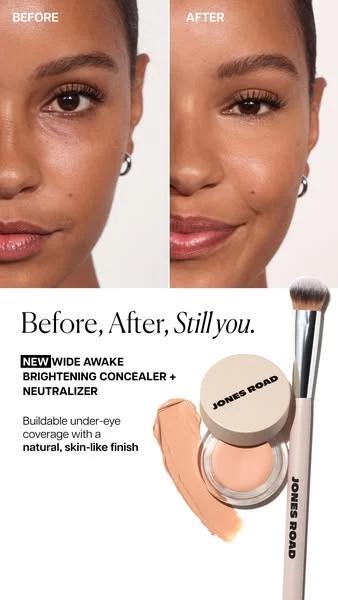
| Jones Road Beauty | Beauty | Split photo | Before, After, Still you. |
| Jones Road Beauty | Beauty | Long-copy static | If foundation sticks have let you down… |
Frequently asked questions
What is a comparison ad?
An ad that shows your product beside an alternative, such as a competitor’s category, an old habit or a before photo, so the buyer can see the difference.
Is it legal to compare yourself to competitors in ads?
In many markets comparative ads are allowed if they are truthful and fair. Rules vary by country and platform, so comparing against a category is the lower-risk route.
Are before and after ads a type of comparison ad?
Yes. The rival is the buyer’s own past. The same fairness rules apply: same person, light and angle.